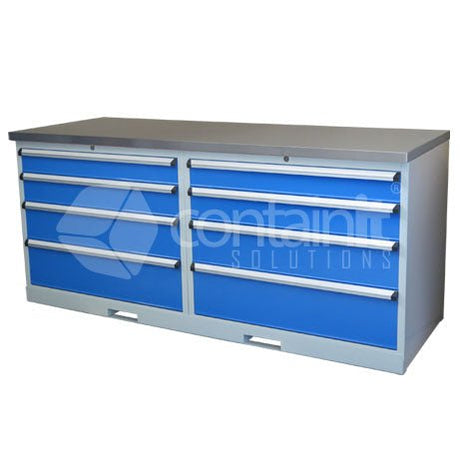
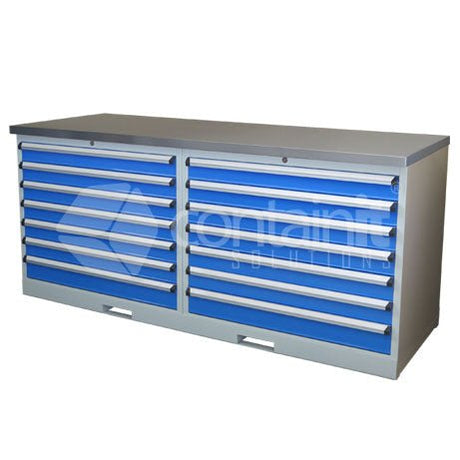
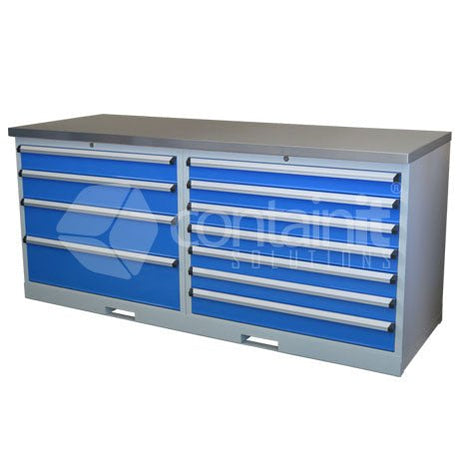
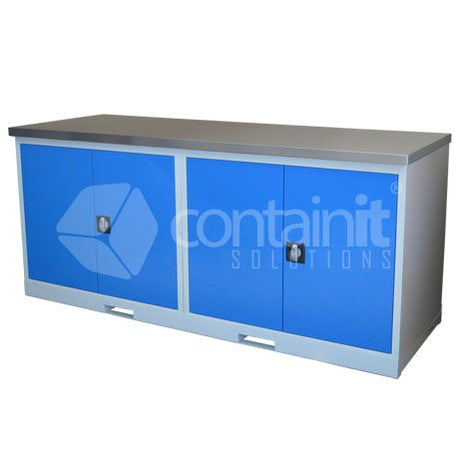
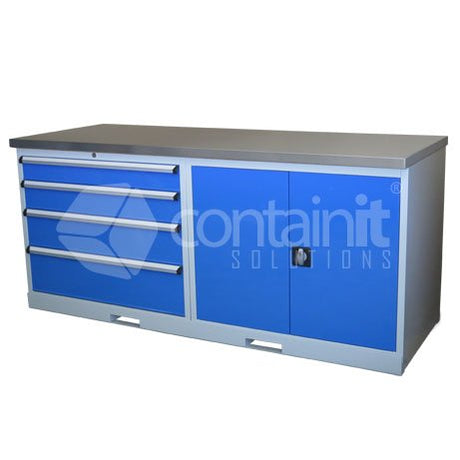
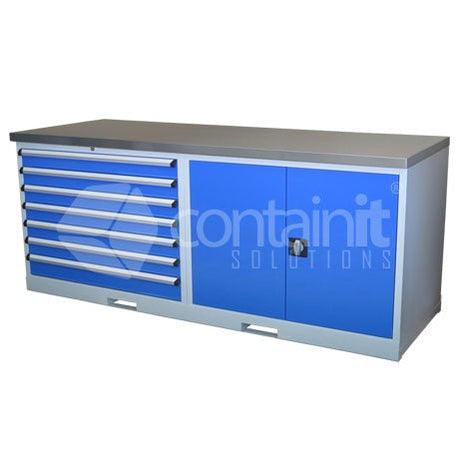
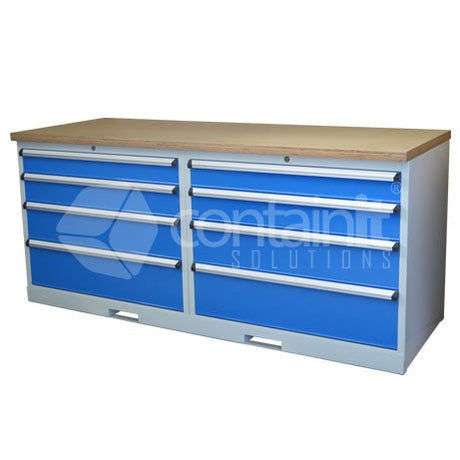
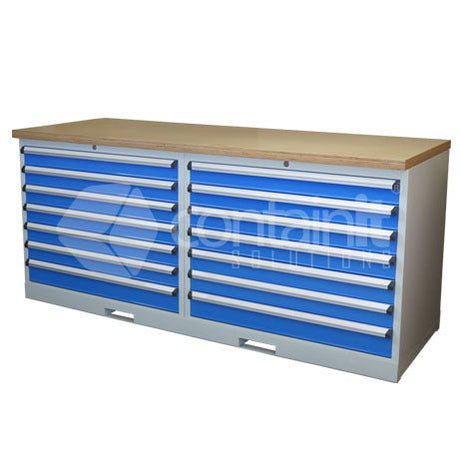
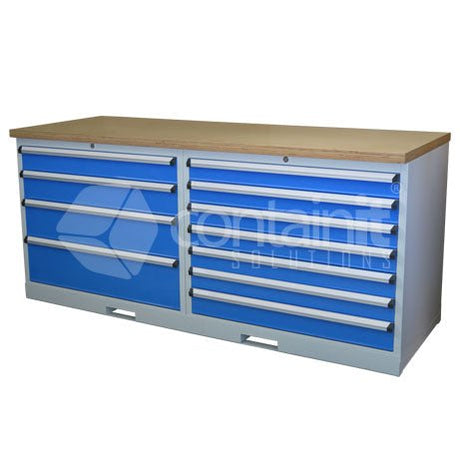
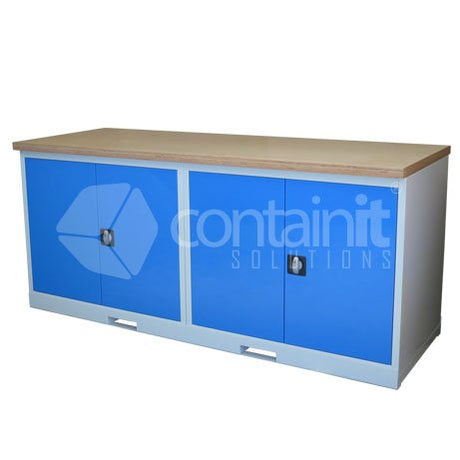
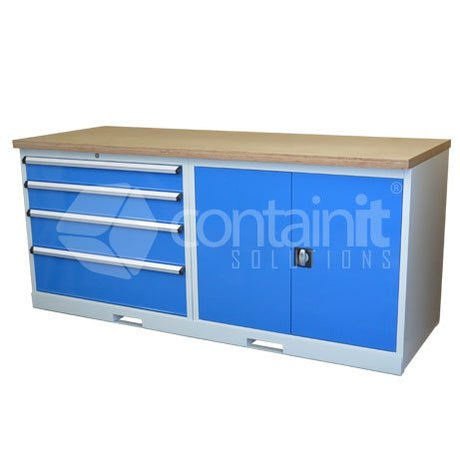
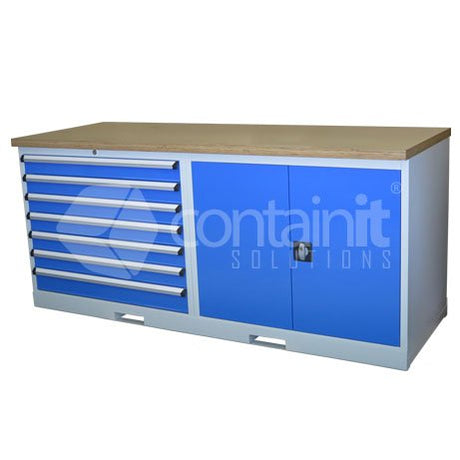
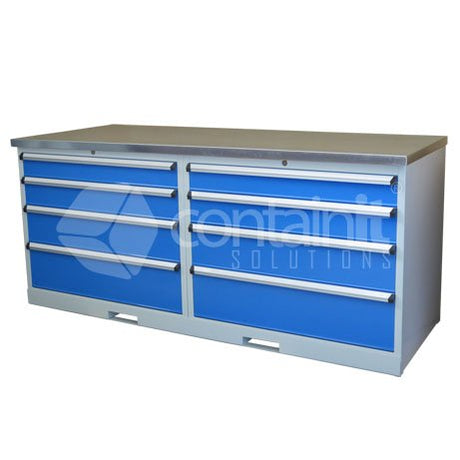
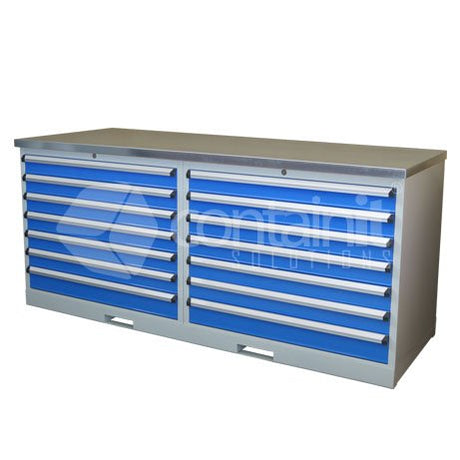
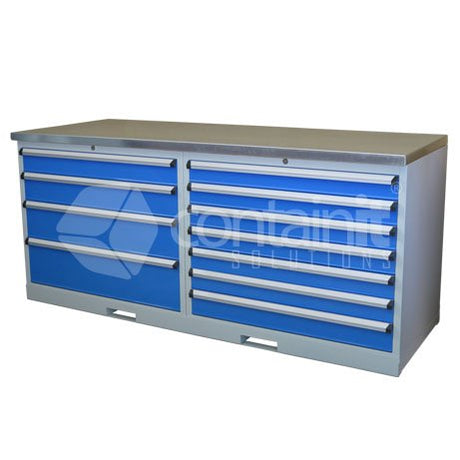
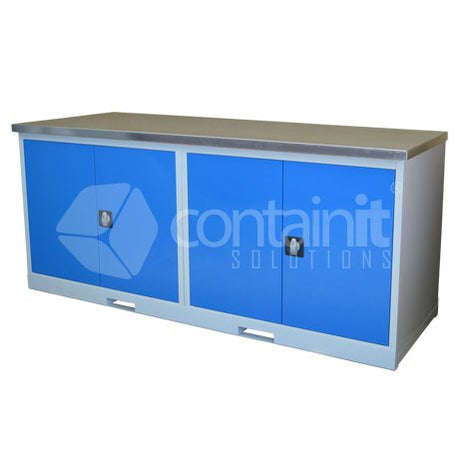
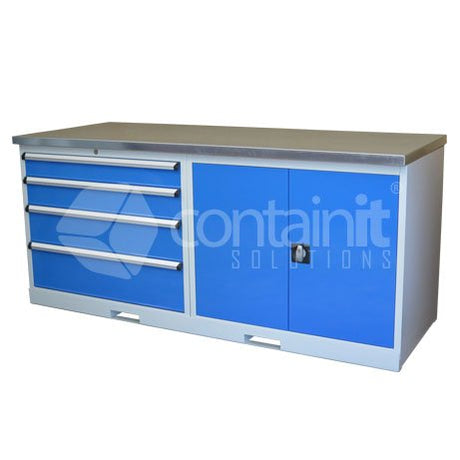
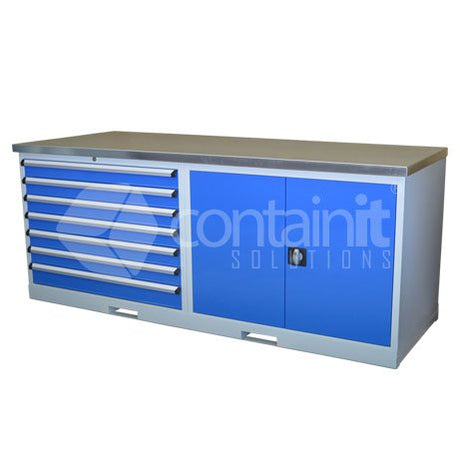
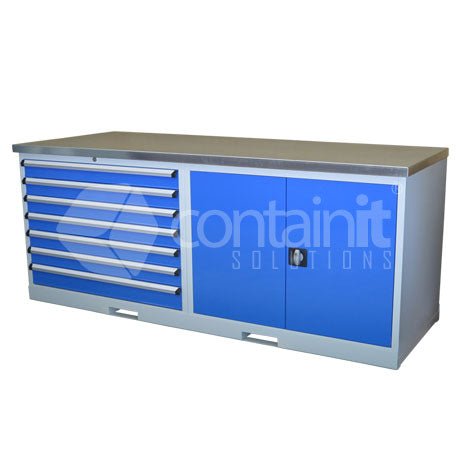
Workbench with Drawers and Cupboard Storage Options
Some teams need quick access to hundreds of small parts. Others need space for larger tools, workshop equipment, replacement components and maintenance supplies. The best storage layout depends on how the bench is used throughout the day.
Drawer storage keeps hand tools, fasteners, electrical fittings and spare parts organised and easy to find. Compatible metal and plastic drawer inserts are available in layouts ranging from 6 to 99 compartments, making it easier to separate stock by size, application or product type.
Cupboards suit larger equipment, filters, tool cases and workshop supplies that do not need compartmentalised storage. Adjustable shelving provides flexibility as storage requirements change.
A combined drawer and cupboard layout suits teams that require quick access to small parts alongside larger equipment. Frequently used tools stay organised in drawers, while bulkier items are kept protected below the work surface and do not clutter the bench.
Workshop Bench Materials and Configuration Guide
The right workshop bench configuration depends on the work being completed, the worktop required, cleaning requirements and daily use.
| Option |
Best suited to |
What to consider |
| Stainless Steel Bench Range |
Wash-down areas, food manufacturing, laboratories and clean workspaces |
Match the worktop material to the products handled, cleaning methods, hygiene requirements and daily use. |
| Ply Timber Bench Range |
Assembly, repairs, packing and general workshop work |
Timber provides a practical surface for many everyday industrial tasks. |
| Galvanised Bench Range |
Manufacturing, warehouses, maintenance workshops and production areas |
Choose a work surface that suits the application and operating conditions. |
| Drawers and Cupboards |
Tools, spare parts, consumables and larger equipment |
Drawers improve visibility, while cupboards provide storage for bulkier items. |
Heavy-Duty Workbench Planning for Industrial Work Areas
A heavy-duty workbench should fit the available workspace just as well as it suits the job at hand. Floor space, storage access, worktop requirements and future changes all influence which workbench layout will remain practical over time.
Leave enough room for drawers and cupboard doors to open without blocking walkways, pallet movements, neighbouring benches or fixed equipment. Frequently used tools belong within easy reach, while larger items can be stored beneath the work surface without interrupting daily tasks.
Packing, assembly, repairs and maintenance place different demands on a workbench. Choose a worktop material that matches the work you do. It allows the workstation to remain practical today while adapting as storage needs change.
Safe Work Australia recommends arranging work areas and selecting appropriate working heights to reduce awkward postures and unnecessary manual handling wherever possible.